Table Of Content
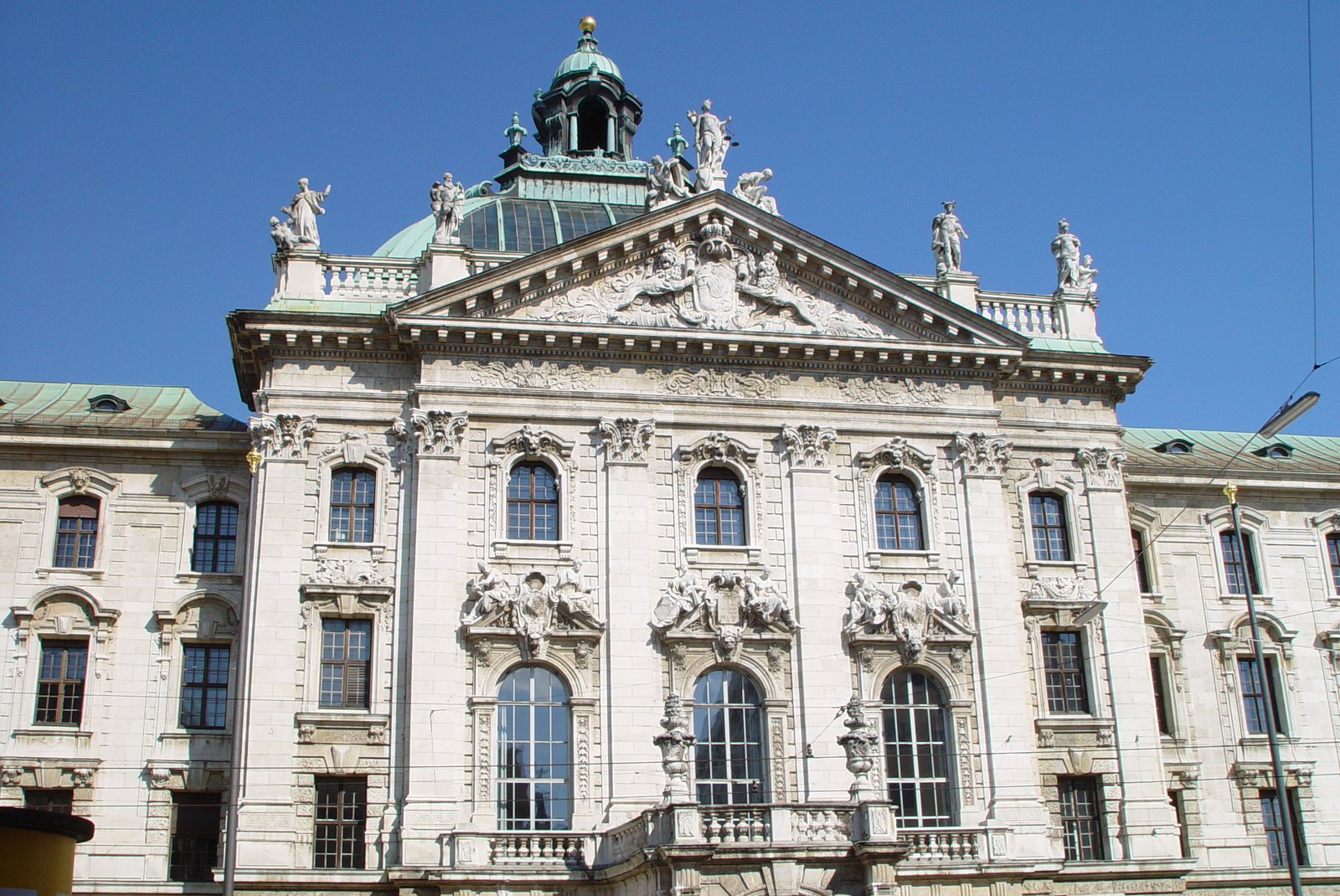
Baroque's influence extended from Italy and France to the rest of Europe, and then travelled via European colonial initiatives, trade and missionary activity to Africa, Asia, and South and Central America. Its global spread saw Chinese carvers working in Indonesia, French silversmiths in Sweden and Italian hardstone specialists in France. Sculpture was sent from the Philippines to Mexico and Spain, whilst London-made chairs went all over Europe and across the Atlantic, and French royal workshops turned out luxury products that were both desired and imitated by fashionable society across Europe.
Transition to rococo
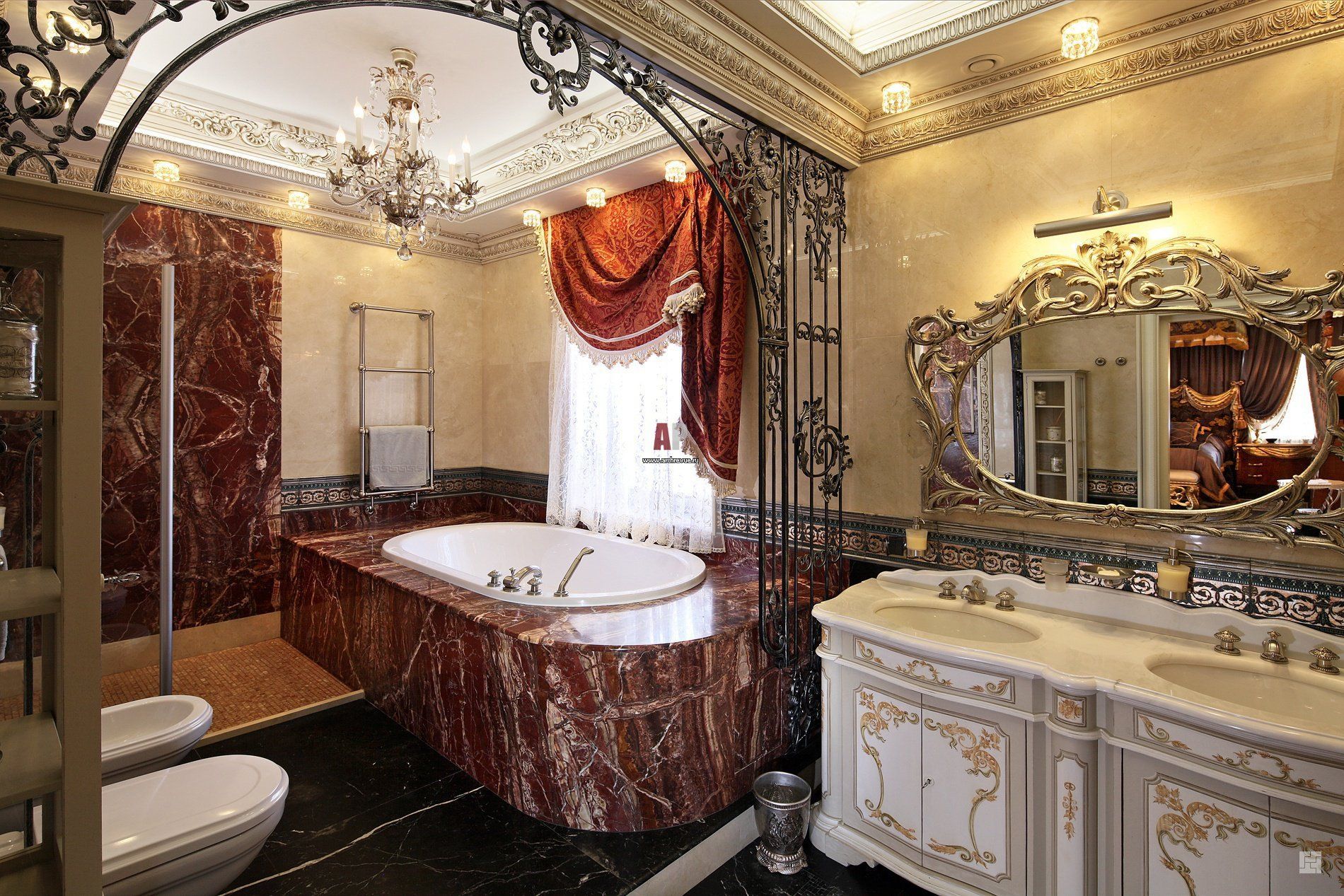
New techniques, such as marquetry (the laying of veneers of differently coloured woods onto the surface of furniture), developed by French and Dutch cabinet-makers and learned from them elsewhere, were also developed. Imposing architecture was also used to reinforce the power of absolute rulers, such as with the Palace of Versailles, in France – the most imitated building of the 17th century. In 1717, the Swedish architect Nicodemus Tessin the Younger compiled a "treatise on the decoration of interiors, for all kinds of royal residences, and others of distinction in both town and country", based on his own travel notes. One of the most expensive, recent innovations he recorded was the presence of mirrors so large they covered entire walls.
Baroque Architecture: Everything You Need to Know
The church commissioned architects to reimagine many of the elements of Renaissance architecture—like domes and colonnades—and make them grander and more dramatic. Inside, almost all design decisions were made to entice visitors to look up, with the goal to make worshipers feel as if they were looking into heaven. Quadratura or trompe-l’oeil paintings on the ceilings or winding columns that evoked upward movement were often employed as part of this. One last difference between Baroque and Rococo is the interest that 18th century aristocrats had for East Asia.
Ecstasy of Saint Teresa
As the Rococo period was followed by the Neoclassical style within fifty years many Baroque artists became obscure and overlooked. Rubens and Rembrandt were rediscovered in the 1800s, as Rubens influenced the Romantics Théodore Géricault, and Eugène Delacroix, and Rembrandt influenced the Impressionists and Post-Impressionists. Claude's landscape paintings influenced J.M.W. Turner, and Velázquez was a significant influence upon Édouard Manet, Pablo Picasso, and Francis Bacon.
Central Europe
The resulting style, emphasizing a surface in motion, was called "entallador" and was adopted throughout Spain and Latin America. An example of the Baroque's theatricality can be found in Gianlorenzo Bernini's (1598 – 1680) design for St Peter's Square. Its grand, imposing curved colonnades, centred on an obelisk, are used to both overwhelm the visitor and to bring them into the church's embrace. Baroque style may seem out of step with modern decor, but it remains an influence for contemporary interior designers and home decorators alike, who often embrace a Baroque minimalist approach to incorporating the interior design style. In the Philippines, which was a Spanish colony for over three centuries, a large number of Baroque constructions are preserved.
Style & characteristics
The third tendency was a broadening of human intellectual horizons, spurred by developments in science and explorations of the globe. These produced a new sense of human insignificance (particularly abetted by the Copernican displacement of Earth from the centre of the universe) and of the infinitude of the natural world. Landscape paintings in which humans are portrayed as minute figures in a vast setting were indicative of this changing awareness of the human condition. It’s the sheer scale and importance of events as well as the contrasting painting styles over the course of the era that make it hard to pin an idea to Baroque.
Key Artists
To portray her mystical encounter, Bernini followed the Spanish nun's autobiographical account in The Life of Teresa of Jesus ( ). The sculptures are illuminated within the backdrop while at the same time the richly colored framing columns and niches place the nun and angel within a separate, otherworldly space. Theatre boxes, visible on the left and the right, containing life-sized sculptures of the Cornaro family in animated conversation, heighten the effect. The contrast of the human figures in white marble with the colored marble of the settings subtly conveys an underlying identification between the vision of the saint and the vision of the papal family. Known as the Counter-Reformation, Baroque architecture was part of the Church’s campaign to entice congregants back into Catholic worship. By constructing churches to inspire awe and emotion, Catholics believed they could attract parishioners back to them.
Baroque art and architecture
The term Baroque probably derived from the Italian word barocco, which philosophers used during the Middle Ages to describe an obstacle in schematic logic. Another possible source is the Portuguese word barroco (Spanish barrueco), used to describe an imperfectly shaped pearl. In art criticism the word Baroque has come to describe anything irregular, bizarre, or otherwise departing from rules and proportions established during the Renaissance. Until the late 19th century the term always carried the implication of odd, exaggerated, and overdecorated. It was only with Heinrich Wölfflin’s pioneering study, Renaissance und Barock (1888), that the term was used as a stylistic designation rather than as a term of thinly veiled abuse and that a systematic formulation of the characteristics of Baroque style was achieved. This technical progress then spread to the other furniture-making hubs of France, Germany, England, and Italy.
Art Movement: Baroque – The Style of an Era
New religious orders that were part of the reform movement like the Jesuits, the Capuchins, and the Discalced Carmelites, were officially encouraged to become important patrons of art. This new Baroque style spread throughout Europe, primarily supported by the Catholic Church led by the Pope in Rome and Catholic rulers in Italy, France, Spain, and Flanders. Rather than having a single moment of inception, the Baroque period brought together a number of innovative developments in the late 1500s as it was informed by the different and rival painting styles of Caravaggio, the Bolognese School led by Annibale Carracci, and the architecture of Giacomo Della Porta. A deciding factor in the formation of the movement's intensity and scope was the patronage of the Catholic Church's Counter-Reformation.
How to Add Baroque Style to Any Interior - Architectural Digest
How to Add Baroque Style to Any Interior.
Posted: Fri, 04 Nov 2016 07:00:00 GMT [source]
A key similarity is the rejection of straight lines, resulting in increasingly pictorial sculptures where movement and expression are emphasized. Notable late French baroque sculptors included Étienne Maurice Falconet and Jean Baptiste Pigalle. Pigalle was commissioned by Frederick the Great to make statues for Frederick's own version of Versailles at Sanssouci in Potsdam, Germany. Falconet also received an important foreign commission, creating the famous statue of Peter the Great on horseback found in St. Petersburg.
It was also one of the first architectural styles to spread globally and a prime example of the way architecture is used to convey cultural messages. Executed in the French Baroque style, the Palace of Versailles is often cited as one of the most notable royal residences in the world. As the seat of the Bishop of London, St. Paul’s Cathedral is one of the most celebrated Baroque buildings in England. It’s considered a more restrained version of the Baroque style, and the large dome of the cathedral remains one of the most recognizable parts of of the London skyline. Commissioned in 1634 and built between 1638 and 1646 (the façade was later added in 1677), this Roman church was designed by Francesco Borromini as a monastery for a small group of Spanish monks.
It is also lauded, even 300 years later, by artists and viewers alike as a seminal example of the art of painting. This work presents an imagined and idealized city drenched with a feeling of calm grandeur, enhanced by the work's poetic emphasis upon light. It references the biblical story of the Queen of Sheba's visit to King Solomon in Jerusalem, yet focuses primarily on the landscape with the sun and its rays vertically intersecting the canvas. Classical buildings frame both sides of the view, creating a strong sense of composition, informed by a precise linear perspective.
Other French artists, most notably Georges de La Tour, were influenced by Caravaggio's tenebrism but turned away from dramatic action and effects. Painting primarily religious subjects, he innovatively explored nocturnal light, employing geometric compositions and simplified forms to convey a calm and thoughtful spirituality. La Tour's work was influential in his time, as King Louis XIII, Henry II of Lorraine, and Cardinal Richelieu were patrons of his work. Louis, Antoine, and Mathieu Le Nain collaborated on most of their works, and their genre scenes emphasized the realism of everyday labor, as seen in their The Blacksmith at His Forge (c. 1639) and Peasants' Meal (1642). This dynamic painting depicts the Biblical story of the pious widow Judith and her attendant Abra as they behead the struggling Assyrian general Holofernes. When Holofernes besieged and threatened to destroy her city, Judith adorned herself and went out to meet him on the pretext of offering information.
Under the rule of Napoleon III, Haussmann was appointed to reconstruct Paris by adding a new network of streets, parks, trains, and public services. Some of the characteristics of Haussmann's design include straight, wide boulevards lined with trees, and short access to parks and green spaces. The buildings are single-room basilicas, deep main chapel, lateral chapels (with small doors for communication), without interior and exterior decoration, simple portal and windows. It is a practical building, allowing it to be built throughout the empire with minor adjustments, and prepared to be decorated later or when economic resources are available. Caravaggio, too, was rediscovered, but not until the mid-1900s, and his work has subsequently influenced photographers, filmmakers, and artists. A revival of interest in Bernini's architectural work is noted by a number of contemporary architects, including I.
KAAN Architecten undertakes the renovation and extension of Museum Paleis Het Loo, taking cues from the layout and ... - Global Design News
KAAN Architecten undertakes the renovation and extension of Museum Paleis Het Loo, taking cues from the layout and ....
Posted: Thu, 11 May 2023 07:00:00 GMT [source]
“This was done by creating theatrical forms through the manipulation of the classical orders, curvature in walls and façades, and the dynamic sequencing of spaces,” she explains, citing Gian Lorenzo Bernini’s Church of Sant’Andrea al Quirinale as a good example. “Its use is often through reflective or glimmering surfaces, such as the extensive use of gold in interior church and palace decoration,” she says. The Rococo style originated in Paris about 1700 and was soon adopted throughout France and later in other countries, principally Germany and Austria. Like the Baroque style, Rococo was used in the decorative arts, interior design, painting, architecture, and sculpture.




No comments:
Post a Comment